HVAC & Heat Pumps
Heating and cooling is the biggest line on most energy bills. These guides show what each system really costs to run and when an upgrade pays for itself.
Start here
What Size Heat Pump Do You Need?
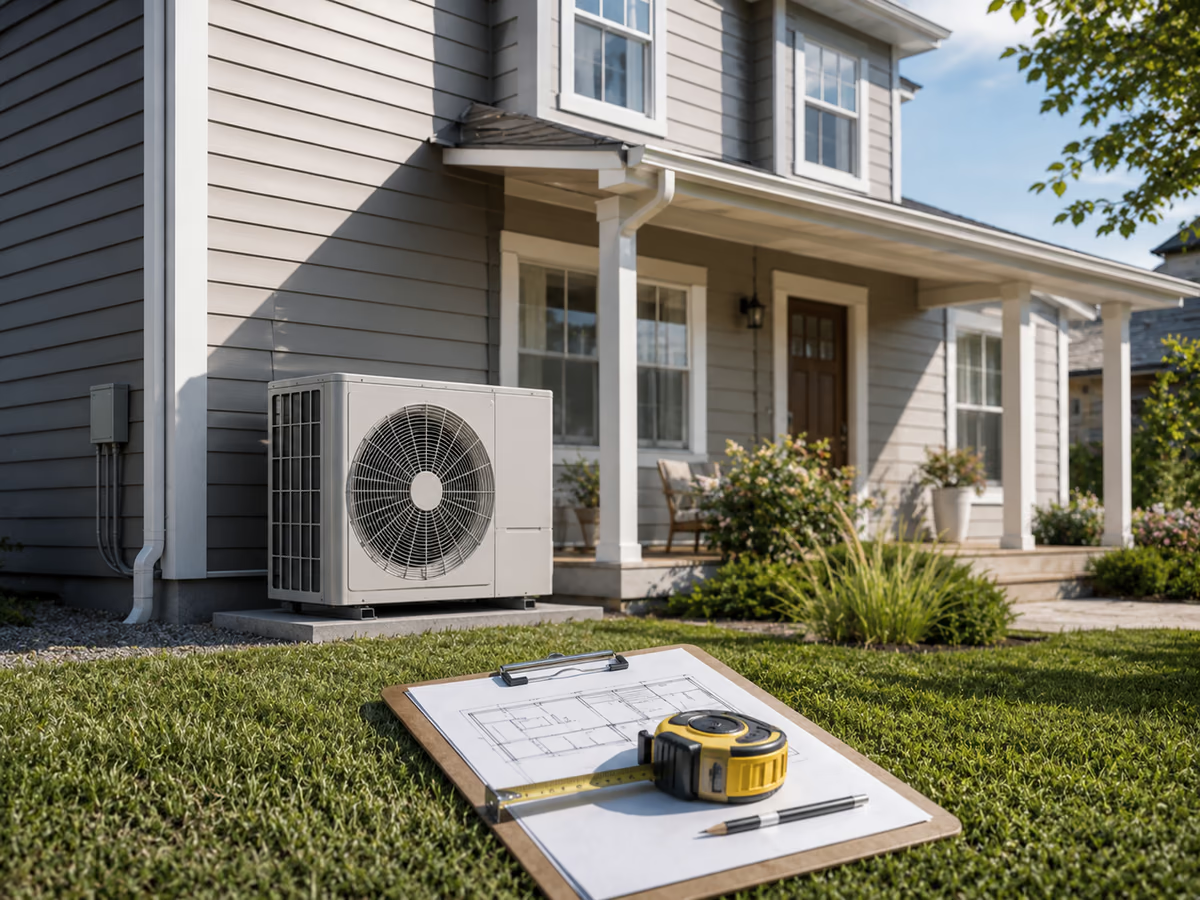
No size follows from floor area alone. Capacity is quoted in BTU/h or in tons — one ton is 12,000 BTU/h — but the figure you need comes from a calculated heating and cooling load (ACCA Manual J), and equipment is then selected against the manufacturer's own performance data (Manual S). A square-footage estimate is a sanity check on a quote, not a specification. Bigger is not safer either: ask what a unit delivers at your local design temperature, not just what its nameplate says at 47°F.
Read the guideRun the numbers
All guides in Heating & Cooling
Heat Pump vs Furnace: Which Is Cheaper to Run in 2026?
Against oil, propane and electric resistance heat, a heat pump wins easily. Against natural gas it is closer than most articles admit: at the current U.S. average of 18.44¢/kWh and $15.34 per thousand cubic feet of gas, a heat pump running at a seasonal COP of 3 costs about $18.01 per million BTU of delivered heat versus about $15.41 for a 96% AFUE gas furnace. The heat pump needs a seasonal COP above roughly 3.5 to beat cheap natural gas — and your own two rates decide it, because state electricity prices range from 12¢ to 52¢.
Heat Pump Water Heater vs Standard Electric: What You Actually Save
ENERGY STAR puts the saving at about $550 a year for a household of four against a standard electric resistance tank, on a stated assumption of 14.6¢/kWh and an incremental purchase cost of $1,503 — roughly a three-year payback before any rebate. The catch is not the math, it's the installation: the unit needs about 700 cubic feet of surrounding air, a condensate drain, a 240-volt supply, and a space that stays above roughly 40°F.
What SEER2 Rating Should You Buy?
Start from the federal minimum for your region — 13.4 SEER2 for a split-system air conditioner in the North, 14.3 SEER2 in the Southeast and Southwest below 4.5 tons, and 14.3 SEER2 with 7.5 HSPF2 for heat pumps nationally. ENERGY STAR sits at 15.2 SEER2. Above that, the extra efficiency only earns money during hours you actually run cooling, and in a mild climate the premium routinely outlives the equipment.
Why Is My AC Running But Not Cooling?
A central AC that runs but does not cool has failed at moving air, moving heat, or being told when to run. Check the filter, vents, thermostat mode and outdoor unit first. If you see ice, hear hissing, smell burning or the breaker keeps tripping, turn the system off and call a licensed technician.
How Much Does It Cost to Run a Window Air Conditioner?
Cost per hour is average power in kW multiplied by your electricity rate. The hard part is the power figure: BTU/h measures cooling capacity, not electricity. To convert, divide capacity by the unit's CEER — a 10,000 Btu/h model at the ENERGY STAR level of 14.7 draws about 680 watts while the compressor runs. At the U.S. average rate of 18.44¢/kWh that is about 13¢ an hour, or roughly $1.00 a day if the compressor runs eight hours. The compressor cycles rather than running whenever the unit is switched on, so multiplying nameplate watts by the hours the unit is on usually overstates the bill. Your rate, your climate and your thermostat setting move the answer more than the model does.
How we build these numbers
How we frame itCostSavingsPaybackConfidenceNext step
Every figure in this section is a modelled estimate from public data, printed with the assumptions and sources behind it. Read how we build and check these numbers