Why Is My AC Running But Not Cooling?
The checks a homeowner can safely make when the air conditioner runs but the house stays warm, and the symptoms that mean you should stop and call a professional.
- Sort the symptom into airflow, control or refrigeration, and start with the cheap causes: a clogged filter, wrong thermostat mode, blocked return vents, or an outdoor unit smothered by debris.
- If the coil is iced over or you suspect a refrigerant leak, shut the system off and call a professional.
- Refrigerant isn't consumed — if a system is low, there's a leak, and topping it up without fixing the leak wastes money.
- A hissing or bubbling sound, an electrical burning smell, a repeatedly tripping breaker, or water pooling around the indoor unit mean stop and call a professional; ice means turn the system off and let it thaw first.
- Sometimes the cause is the house, not the unit — leaky ducts or an oversized system can leave a house cool but clammy.
On this page
A central air conditioner that runs but does not cool has failed at one of three jobs: moving enough air, moving heat out of the house, or being told correctly when to run. The three look identical from the couch — warm rooms, long run times — but they are separated by observations you can make safely in a few minutes, and only one of them needs a technician's gauges.
Sort the symptom into one of three families
| Symptom | Likely cause | Safe homeowner check | Professional needed? |
|---|---|---|---|
| Weak air at the vents; filter looks grey or you cannot see light through it | Airflow: restricted filter | Pull the filter, hold it up to light, replace it if it is clogged | No — unless airflow stays weak with a clean filter |
| Some rooms cool, others do not | Airflow: closed or blocked supply vents, furniture or rugs over a return, or leaky ducts | Open and unblock every vent and return, then compare rooms | Maybe — duct leakage is found by testing, not by eye |
| Ice on the indoor coil, a refrigerant line or the outdoor unit | Airflow or refrigeration: restricted airflow, or low refrigerant from a leak | Turn the system off at the thermostat so the ice can melt, then replace the filter and clear vents. Do not chip the ice or run the system while it is iced | Yes — call if the ice returns, or if you find no airflow cause for it |
| Indoor blower runs, air is warm, outdoor unit is silent | Control or electrical: thermostat mode or setpoint, a tripped breaker, a safety switch, or a failed outdoor component | Confirm mode is 'cool' and the setpoint is below room temperature; check that the condensate drain is not backed up; reset the breaker once | Yes if the breaker trips again or the outdoor unit still does not start |
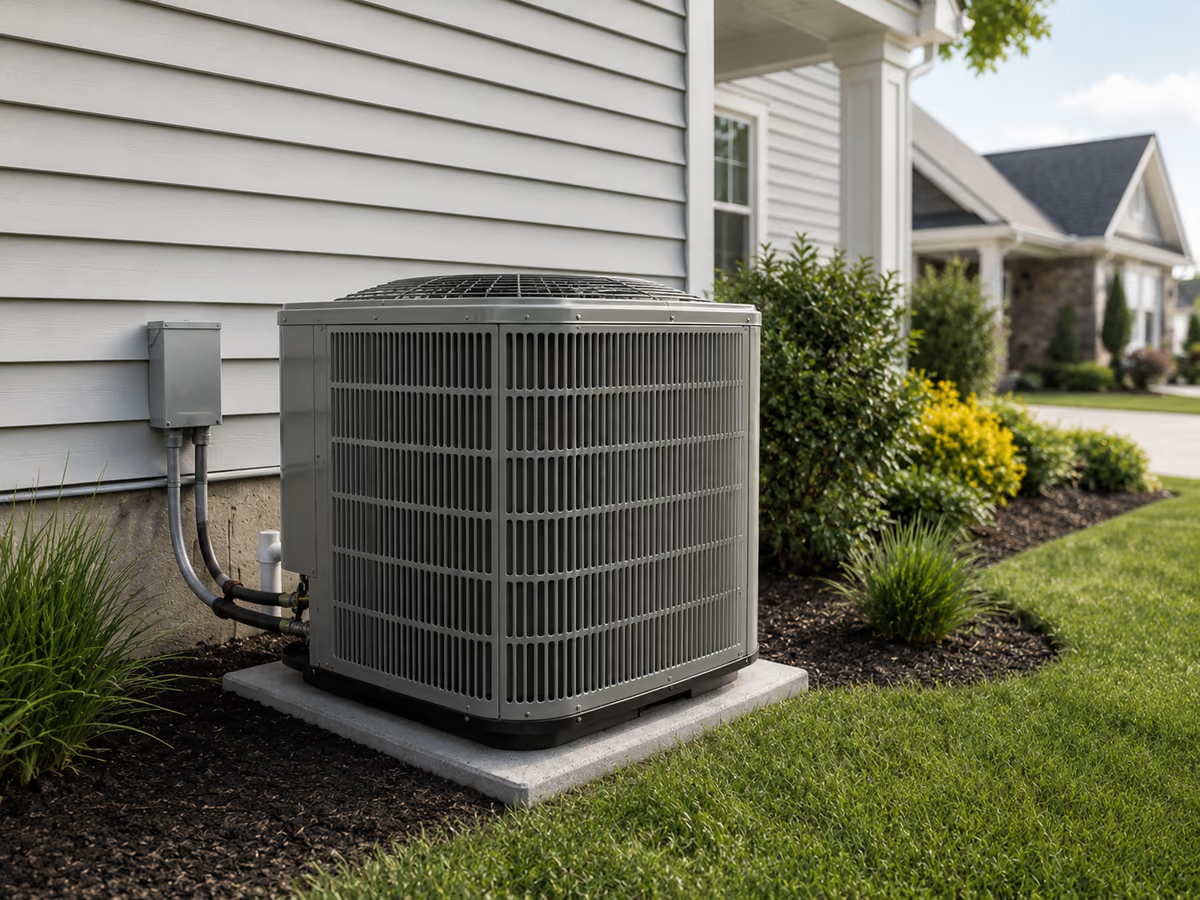
| Outdoor unit is running but the air is warm | Refrigeration: heat is not being moved — low refrigerant from a leak, or a failing outdoor component | Clear leaves, grass clippings and growth from around the outdoor unit; look and listen, nothing more | Yes — refrigerant and electrical work need a licensed technician |
| Hissing or bubbling, a burning smell, a breaker that keeps tripping, or water around the indoor unit | Refrigerant leak, electrical fault or blocked drain | Switch the system off and do not restart it | Yes — straight away |
| Thermostat reads cool but the house feels clammy | Humidity, not temperature: an oversized unit that cycles off before removing much moisture, or leaky ducts | Note whether the system runs in short bursts | Maybe — a sizing question, not a repair |
A safe diagnostic, in this order
Work down the list and stop at the first branch that matches what you see. The order puts safety first, then the cheapest and most common causes, so you rule out the most for the least effort.
Follow the first branch that matches
Airflow: the family you can mostly fix yourself
Cooling is delivered by air. Less air across the indoor coil means the coil runs colder, delivers less usable cooling to the rooms, and can ice over. That is why a clogged filter and a refrigerant leak can both end in a frozen coil, and why the filter comes first: it costs the least and rules out the most. If you can't see light through it, replace it.
Blocked returns starve the system the same way, and furniture and rugs are frequent culprits. The outdoor unit needs clear space because it rejects heat there — leaves, grass clippings and anything growing against it get in the way.
Control: when the unit is doing exactly what it was told
Check that the thermostat is set to 'cool', that the setpoint is genuinely below room temperature, and that the fan is on 'auto' rather than 'on'. 'On' runs the blower continuously, including when the cooling is off, and pushes uncooled air — it feels like a failure and is not one.
A backed-up condensate drain can trip a safety switch and stop cooling entirely. A long-silent outdoor unit with a strong indoor airflow points toward control or electrical causes rather than refrigerant, which is why the decision list above separates the two.
Refrigeration: when heat is not being moved
Refrigerant circulates in a sealed loop. It isn't consumed, so a system that is low has leaked. Any contractor who offers to top it up without finding the leak is selling you the same repair again next summer. Handling refrigerant is legally restricted to certified technicians in the U.S., so this is the family where your job is to observe and describe, not to fix.
When the cause is the house, not the unit
- During extreme heat, systems are sized to hold a temperature difference, not to reach any setpoint — a house may simply be at the limit of what the equipment can do.
- Leaky ducts in a hot attic can lose a large share of the cooling before it reaches a room.
- An oversized unit cools air fast but removes little humidity, leaving a house that reads cool on the thermostat and feels clammy. DOE's Building America guidance on air conditioning covers oversizing and humidity, and why square-footage rules of thumb are inadequate for choosing a size.
What to do next
Run the decision list once, then call with what you saw. A technician who hears 'blower runs, outdoor unit silent, breaker reset once' starts in a different place from one who hears 'it just doesn't cool' — and the symptoms you can describe usually shorten the diagnosis and the bill.
Sources
- Central Air Conditioning — U.S. Department of Energy — Energy Saver. Consulted July 22, 2026.
- Air Conditioning (one ton = 12,000 Btu/h, why square-footage rules of thumb are inadequate, oversizing and humidity) — U.S. Department of Energy — Building America Solution Center (PNNL). Consulted August 4, 2026.
Frequently asked questions
Why is my AC blowing warm air?
Common causes are a severely restricted filter, a frozen evaporator coil, low refrigerant from a leak, or the thermostat set to 'fan on' rather than 'cool'. Check the simple ones first.
Should I add refrigerant myself?
No. Refrigerant doesn't get used up — if it's low, there's a leak, and topping it up without fixing the leak wastes money. Handling refrigerant also requires certification in the U.S.
How do I tell an airflow problem from a refrigerant problem?
Airflow problems usually show as weak air at the vents or a dirty filter, and often improve once the filter and vents are cleared. A refrigerant problem shows as normal airflow with warm air, often with ice, and does not improve. Only a technician with gauges can confirm a leak, so describe what you saw rather than guessing.
My outdoor unit is iced up in summer. What does that mean?
Ice usually points to restricted airflow or low refrigerant. Turn the system off so the ice can melt, check and replace the filter, and if it recurs, call a technician.