What Temperature Should You Set Your Thermostat?
The thermostat settings the Department of Energy recommends for winter and summer, why the setback matters more than the number, and how much it realistically changes your bill.
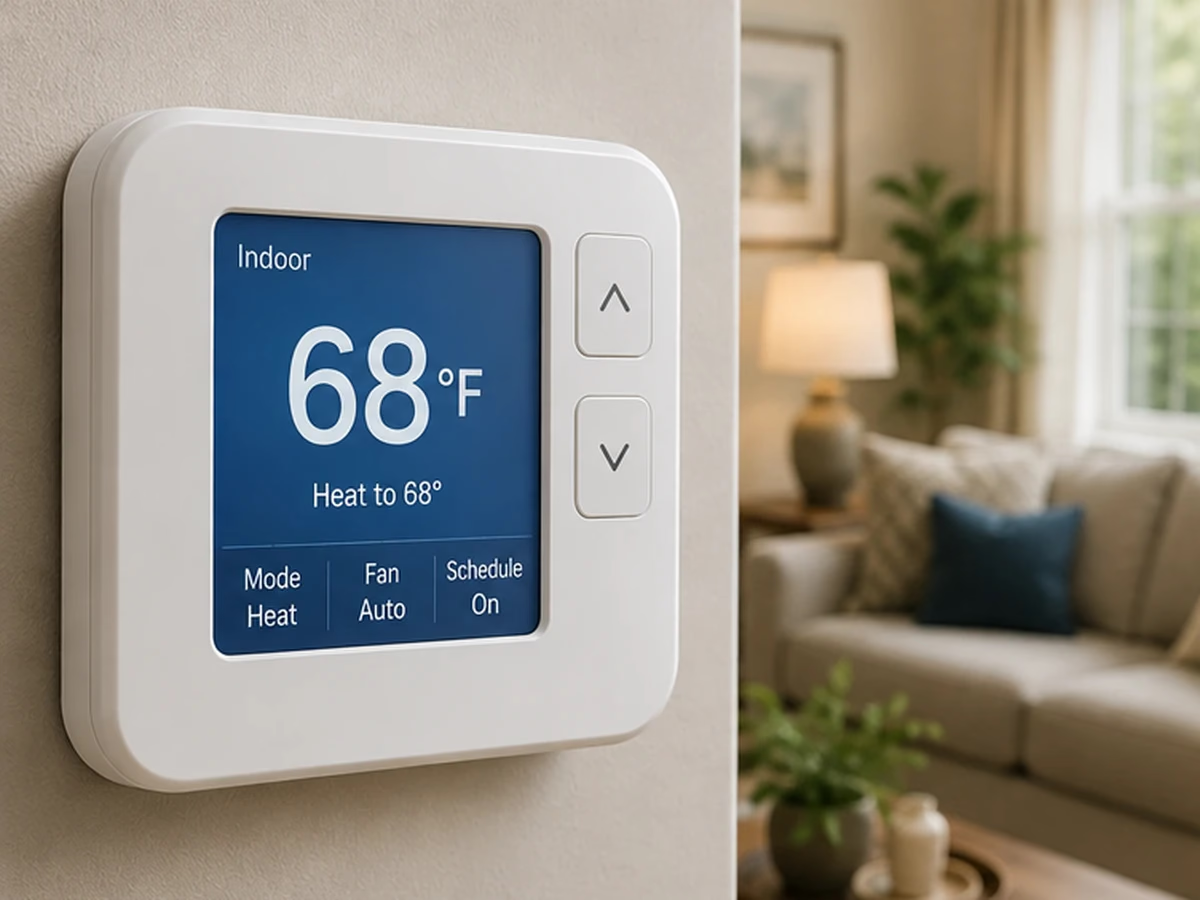
- DOE suggests around 68°F in winter while awake, lower while asleep or away; in summer, as high as comfortable.
- The setback — the gap between occupied and unoccupied temperatures — saves more than any single setpoint number.
- Heat pumps are the exception: a large manual setback can trigger expensive backup resistance heat, so use the thermostat's smart-recovery mode instead.
- Very humid climates, homes with radiant floors or high thermal mass, and medically vulnerable households need a different approach.
- Consistency beats micromanagement — repeatedly overriding a schedule usually erases the benefit.
On this page
Most thermostat advice fixates on a single number. The number matters less than the pattern: how far you let the house drift when nobody needs it comfortable, and for how many hours a day. Below is a starting point for each situation, the arithmetic for what a schedule can change, and the cases where the usual advice stops applying.
Starting points by situation
| Situation | Starting point | Why | Watch for |
|---|---|---|---|
| Winter, awake and at home | About 68°F | DOE's suggested starting point; it sets the baseline you set back from | Your own comfort — adjust from here |
| Winter, asleep | 7–10°F below your waking setting | The longest uninterrupted setback of the day | Feeling cold in bed; if so, make the setback shallower rather than abandoning it |
| Winter, away | The same 7–10°F back | The widest gap between inside and outside while nobody benefits | A setting low enough to put pipes at risk in an unheated or cold-prone space |
| Summer, at home | As high as you find comfortable | Cooling energy rises as the gap between inside and outside grows | Humidity: cooling also dries the air |
| Summer, away | Higher still than when you are home | Narrows the gap to the outdoors while nobody is there | In very humid homes, indoor humidity climbing while you are out |
| Heat pump, any season | A shallow, thermostat-managed schedule | Large manual swings can call in electric backup heat on recovery | Backup heat running at the end of a setback |
| Radiant floors or high thermal mass | Few, small changes | These systems respond slowly, so frequent setbacks work poorly | Waking to a cold floor that has not yet recovered |
Consistency beats micromanagement. Repeatedly overriding a schedule usually erases the benefit, so pick settings you will leave alone.
Why the gap matters, and what one degree really does
Heat moves from warm to cold, and faster the bigger the difference. Letting your house sit closer to outdoor temperature while you're out means less heat escaping, so less energy to replace. That is why the setback carries the saving, not the headline number: it narrows the indoor–outdoor gap for hours at a time.
What it does not give you is a trustworthy 'percent per degree' rule. The benchmark we can tie to a source is the DOE guidance used in the first worked example below — a saving of about 10% for a 7–10°F setback sustained eight hours a day. We do not scale that down to a per-degree figure: savings depend on climate, insulation, equipment and how the house recovers, and a straight-line shortcut would be false precision.
The heat pump exception
What it's worth in dollars
Heating and cooling is the largest single load in most U.S. homes, so a percentage change here moves more money than anything you can unplug. The exact figure depends on your climate zone, your fuel, your insulation, and your local rate, which is why the examples below show the arithmetic with placeholders rather than a national number.
| Household | Realistic setback window | What to expect |
|---|---|---|
| Empty 9-5, sleeps 8h | 16 hours a day | Largest opportunity — two setback periods |
| Someone home all day | Overnight only | Smaller, but the overnight setback still counts |
| Shift work, irregular | Varies daily | Manual scheduling fails; occupancy-based control does better |
| Heat pump, cold climate | Shallow, thermostat-managed | Deep manual setbacks can call in backup heat and cost more |
Cooling season, humidity and comfort
In summer the logic runs in reverse: the higher the setting, the smaller the gap to the outdoors. But cooling is also dehumidifying, and in a very humid climate a setpoint raised too far can leave air that is warm and damp, which feels worse than the number on the thermostat suggests. EPA's mold guidance includes indoor relative-humidity guidance, and our dehumidifier guide covers how to size one and what it costs to run.
Safety, and who should not set back
- If anyone at home is medically vulnerable — an infant, an older adult, someone unwell — comfort and safety outrank the saving.
- When the house is empty in winter, choose a setting that keeps it safe rather than the lowest the thermostat allows; unheated spaces with pipes are the risk.
- If you wake cold, make the overnight setback shallower instead of dropping the schedule — a smaller consistent setback beats an abandoned deep one.
What to do next
Pick one setback you'll actually keep — most people start with the eight hours they're asleep — and leave it in place for a full billing cycle before judging it. If you don't want to think about it again, that's the honest case for a programmable or smart thermostat.
Sources
- Thermostats — U.S. Department of Energy — Energy Saver. Consulted July 22, 2026.
- Energy Saver: Save Energy, Save Money — U.S. Department of Energy. Consulted July 22, 2026.
- Residential Energy Consumption Survey (RECS) — U.S. Energy Information Administration. Consulted July 22, 2026.
- Mold Course Chapter 2 — Why and Where Mold Grows (indoor relative humidity guidance, drying within 24–48 hours) — U.S. Environmental Protection Agency. Consulted August 4, 2026.
Frequently asked questions
Is 68°F really the right winter setting?
It's the Department of Energy's suggested starting point for waking hours, not a rule. What matters more is lowering it while you sleep or are out — that gap is where the saving comes from.
How many degrees should I set back?
DOE's guidance, used in our worked example, is 7–10°F below your waking setting for eight hours a day. If you wake cold or have a heat pump, make it shallower and let the thermostat manage the recovery. A smaller setback you keep beats a deep one you abandon.
How much does each degree save?
We don't give a percent-per-degree figure because we could not tie one to a source for your situation. Savings depend on climate, insulation, equipment and how long the setback lasts. The benchmark we can source is DOE's guidance on a 7–10°F setback held for eight hours a day; test it against your own bills in kWh.
Does turning the thermostat way down save more?
For a furnace, a deeper setback generally saves more. For a heat pump, a large manual setback can call in electric backup heat on recovery and cost you more, so let the thermostat manage it.
Is it cheaper to leave the heating on all day?
No. A house loses heat faster the warmer it is relative to outside, so letting it cool while you're out reduces total loss. The 'leave it on constantly' idea doesn't hold for most homes.